


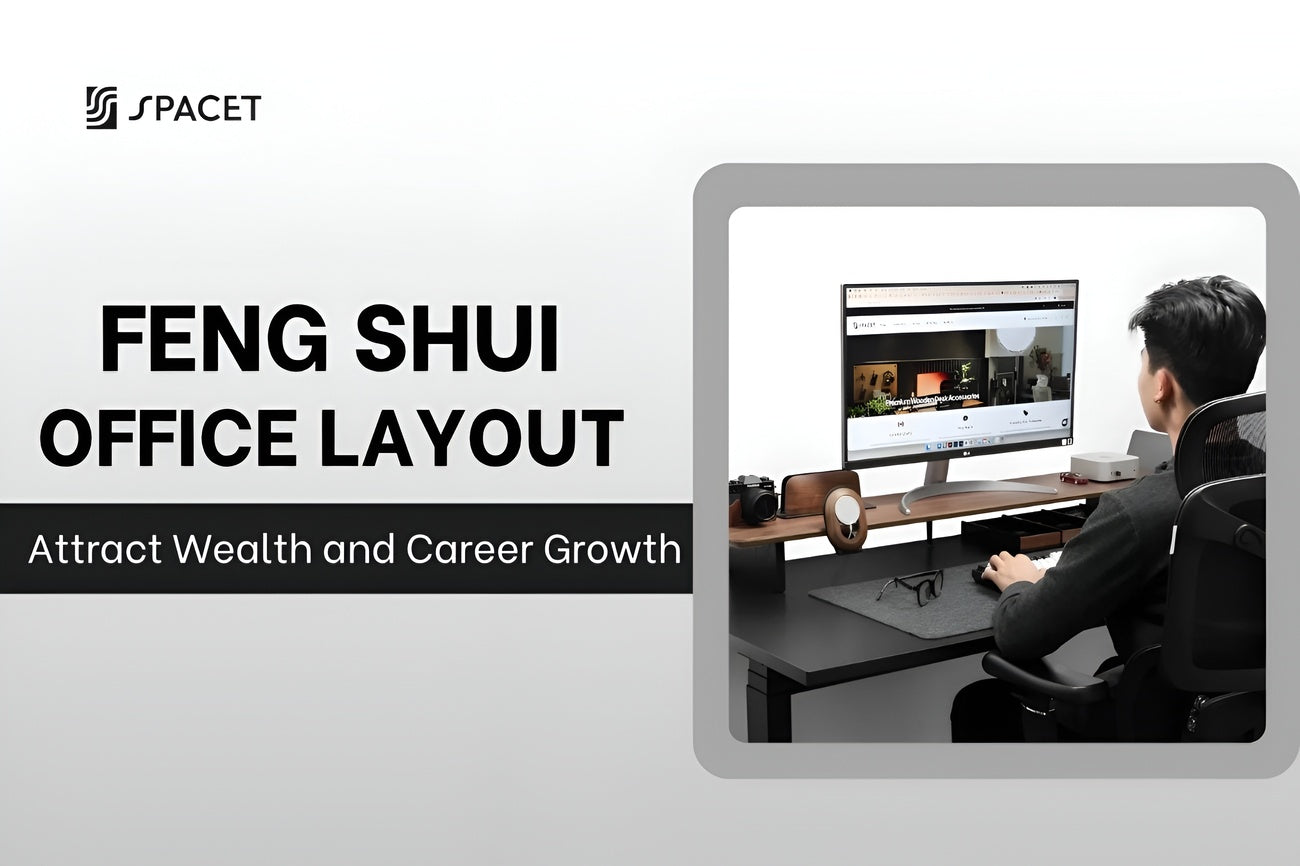
A well-designed Feng Shui office layout can influence more than just productivity, it can also support wealth, career growth, and positive energy flow. In this guide, Spacet shares practical feng shui principles, from desk positioning to the five elements, to help you create a workspace that works in your favor.
What Is a Feng Shui Office Layout and Does It Actually Work?
Feng shui is an ancient Chinese spatial philosophy focused on arranging your environment so that energy, called Qi, can move freely and naturally. Applied to a home office or workplace, a feng shui office layout isn't about hanging lucky charms on the wall. It's about making deliberate choices: where your desk sits, how light enters the room, how organized the space feels, and what materials surround you.

What makes feng shui surprisingly practical is how closely it aligns with modern ergonomics. Natural light from the right angle, a supportive seating position, an uncluttered surface, a layout that doesn't make you feel cornered, these aren't mystical ideas. They're conditions that help people focus, feel in control, and do better work. The two systems point to the same truth: your environment either supports you or quietly works against you.
Feng Shui Desk Placement: The Command Position
The single most important principle in feng shui desk placement is what's called the command position. Your desk should be placed where you can see the entrance to the room without sitting directly in line with the door. This gives you a sense of control, security, and awareness, and you can see what's coming without being caught off guard.
Ideally, your back rests against a solid wall, which in feng shui represents "mountain support," a feeling of being grounded and backed. The open space in front of your desk symbolizes clarity and forward thinking. If you can't move your desk away from a wall-facing position, place a small mirror in front of you so you can see the door's reflection. It's a simple fix, but the psychological effect is real.

Feng shui desk placement checklist:
- You can see the entrance from your seat, but you're not sitting directly in its path.
- Your back is against a solid wall, or your chair has a high back for support.
- Nothing large blocks the open space in front of your desk.
- You're not sitting directly under a ceiling beam, as it creates subtle psychological pressure.
- No doorway or high-traffic walkway sits directly behind you.
Feng Shui Office Layout with Window: Getting Natural Light Right
Natural light is one of the most powerful tools in feng shui. It brings positive yang energy into the space, lifts your mood, and keeps you mentally alert. But a feng shui office layout with window doesn't mean sitting face-to-face with a window all day.
The ideal placement is to have the window on your left or right side, not directly in front of or behind you. Side lighting gives you even, comfortable illumination without glare on your screen or harsh shadows across your work surface. Both feng shui and ergonomics agree: a window straight ahead causes eye strain; a window directly behind creates backlighting that forces your screen brightness up and your eyes to work harder.
Research Computer vision syndrome from the American Optometric Association confirms that improper lighting is one of the leading causes of digital eye strain. If your space doesn't have much natural light, add a warm-toned desk lamp to fill the gap. Avoid cool white fluorescent bulbs, they're harsh and draining over long work sessions. A small plant near the light source adds a layer of wood energy to the space.

Feng Shui Bedroom Office Layout: Working and Sleeping in the Same Room
Not everyone has the luxury of a dedicated home office. If your desk lives in your bedroom, feng shui bedroom office layout becomes a real challenge, because the bedroom is a space for rest and recovery, while a workspace calls for alertness and focus. When those two energy types overlap without any boundary, you end up half-working and half-resting, and doing neither very well.
The core principle here is creating a clear visual and energetic boundary between your sleep zone and your work zone, even in a small room:
- Use a bookshelf, curtain, or small room divider to separate your desk from the bed area.
- Don't place your desk directly facing the bed. Seeing it the moment you sit down pulls your mind toward rest.
- When you finish work for the day, clear your desk and turn off your screen. This signals to your brain that the work zone is closed.
- Don't leave cables, paperwork, or devices scattered around after hours. In feng shui, clutter holds stagnant energy, even when you're not looking at it.
>> If you're working with limited square footage, our guide to Small home office ideas has practical layout approaches worth reading.

The Five Elements: Balancing Energy Through Materials and Color
One of the most practical frameworks in feng shui is the Five Elements: Wood, Fire, Earth, Metal, and Water. The goal isn't to squeeze all five into your space. It's to find a balance that matches your work style and what you want to feel while you're there.
| Element | Materials / Colors | How to use it in your office |
| Wood | Natural wood, green tones | Desk, desk shelf, plants |
| Fire | Light, red / orange | Desk lamp, small color accents |
| Earth | Stone, ceramic, yellow / beige | Plant pots, decorative objects |
| Metal | Metal frames, white / gray | Lamp, device stands |
| Water | Navy / black, mirrors | Landscape artwork, wall mirror |
For a workspace that needs focus and creative energy, Wood is the strongest foundation element to start with. A natural wood desk, a black walnut or oak desk shelf, these bring in stable, warm, growth-oriented energy. It's no coincidence that natural wood pieces show up in almost every well-designed feng shui workspace. They're not just aesthetic; they do something for the energy of the room.
Colors in a Feng Shui Office Layout: Which One Is Right for You?
Color has a direct effect on mood and performance, and in feng shui, each color carries a distinct energy. There's no single "best" color for every office, it depends on the nature of your work and what you want the space to bring out in you.
- Blue: Calm, focused, and analytical. Great for writing, research, or any deep thinking work.
- Green: Growth and creativity. Ideal for designers, content creators, or anyone who works with ideas.
- Warm yellow / beige: Stability and trust. Works well for consulting, client-facing, or business spaces.
- White and gray: Clean and clear, but needs warm materials like wood or fabric to avoid feeling cold.
- Red and orange: High energy and enthusiasm, use as small accents only, not as a dominant color.
If repainting isn't on the table, bring color in through objects: a desk tray, a small plant, a shelf in a tone that fits the energy you're after. Small changes land more than people expect.
Ergonomics and Feng Shui: Two Names for the Same Problem
Here's something most feng shui articles don't talk about: ergonomics and feng shui are solving the exact same problem. In feng shui, when your body is uncomfortable, your Qi is blocked. In plain terms: if you're hunched over with neck pain and a sore back, no amount of correct desk positioning is going to make you productive.
Monitor height is the most overlooked ergonomic factor in most home offices. When your screen sits too low on the desk, you spend the whole day with your head tilted down, and that adds up to chronic neck and shoulder tension over time. According to OSHA's ergonomic guidelines, the top of your monitor should be at or slightly below eye level to maintain a neutral neck posture throughout the day.
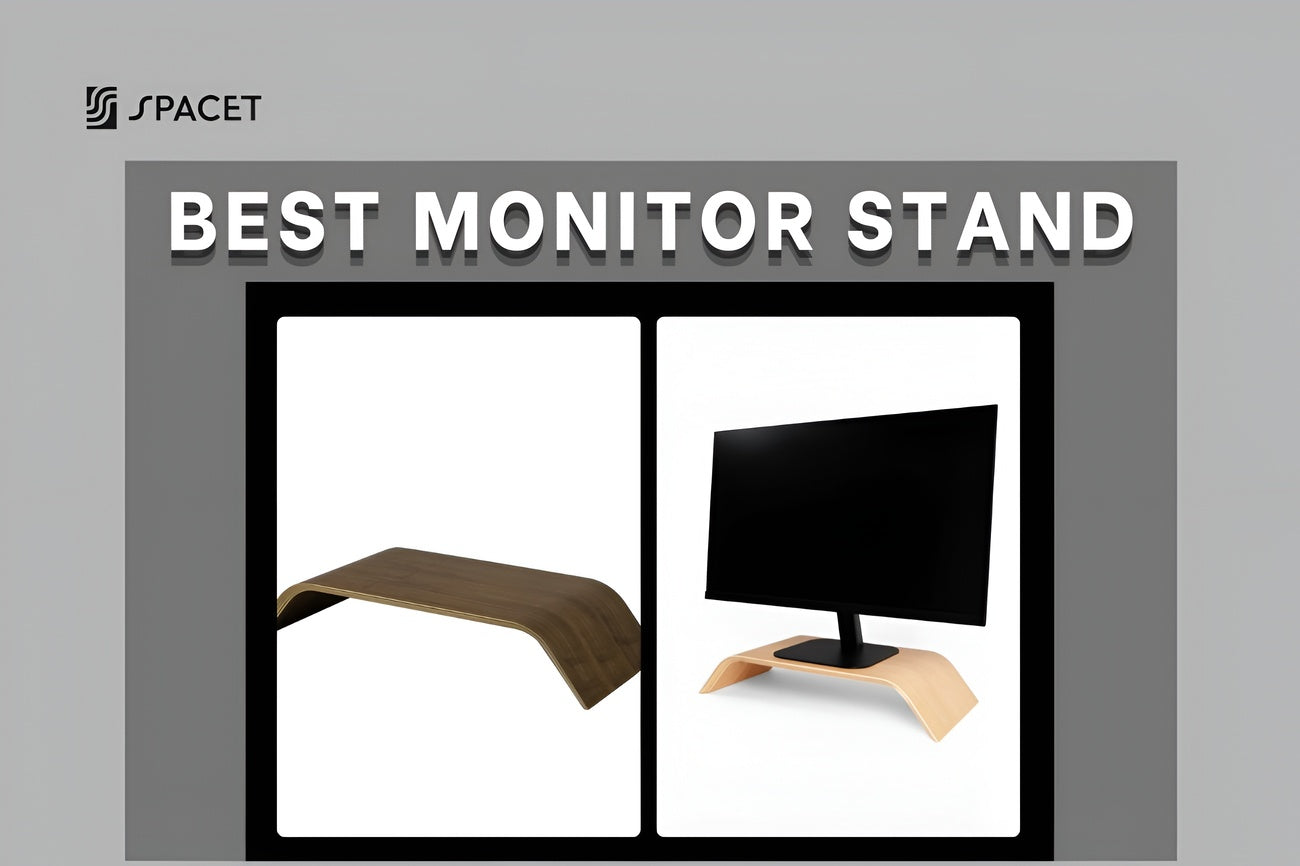
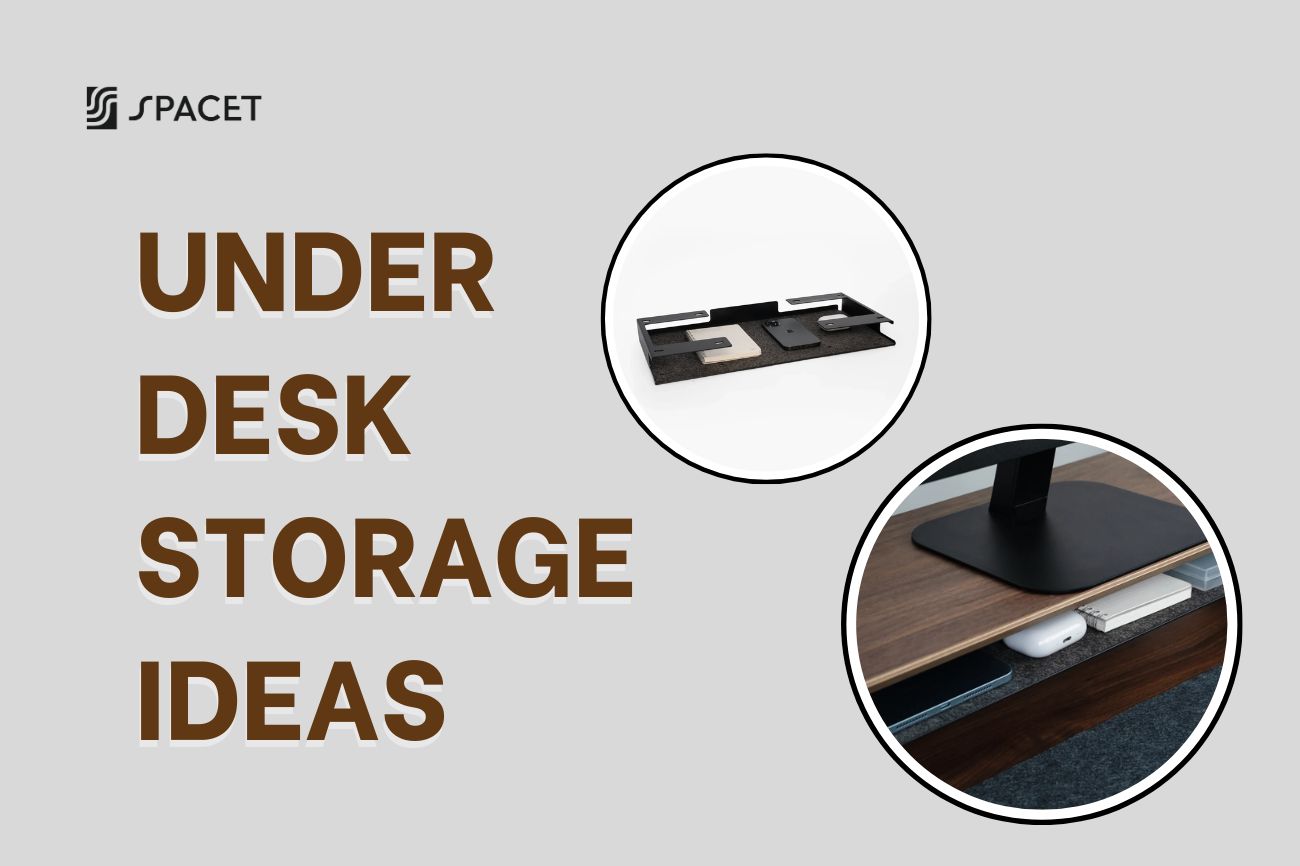
You don't need a sit-stand desk to fix this. A desk shelf placed on top of your existing desk raises your monitor to the right height while keeping your desk height the same. It also creates a second tier of storage underneath for your keyboard, notebook, or cables, which directly helps with keeping your surface clean and organized. In feng shui terms: less clutter, better Qi flow.
>> We go deeper on this in our article on How to organize your desk if you want a practical step-by-step approach.
Spacet Desk Shelf: Bringing Wood Energy and Ergonomics Together
From a feng shui standpoint, a natural wood desk shelf is one of the simplest and most effective ways to bring wood element energy into your workspace. It's also one of the most practical upgrades you can make to your feng shui office desk layout without any renovation. That's the thinking behind Spacet Desk Shelf System.
Desk Shelf Pro v2.0 is made from solid black walnut, oak, or white oak, real natural wood, not veneer. It lifts your monitor to eye level, creates a two-tier desk surface, and eliminates the cluttered flat-desk look that feng shui flags as the first thing to fix. It comes in four finishes, from warm natural wood tones to All Black, so it works across most desk setups and room aesthetics.

AIRY Modular Desk Shelf is the more flexible option if you want to build your setup over time. You can add trays, drawers, or accessories as needed, which means your desk organization can grow with you rather than being locked in from day one. A well-organized surface isn't just visually cleaner, in feng shui, it's what allows energy to move freely instead of getting stuck.

To complete the setup, Desk Tray Drawer v2.0 and The Storage Drawer give you clean, accessible storage right on the desk surface.
Common Feng Shui Office Layout Mistakes to Avoid
Even when people know the principles, a few common mistakes tend to undo a lot of the work:
- A cluttered desk surface: This is the number one issue. In feng shui, clutter is considered "sha qi," blocked and stagnant energy that disrupts clear thinking. Clear surface, clear mind.
- Sitting with your back to the door: This creates low-level anxiety you may not consciously notice, but it quietly drains your focus and sense of control throughout the day.
- Monitor positioned too low: Beyond the physical neck strain, a hunched posture actually affects how confident and focused you feel while working, it's not just a body issue.
- Light hitting your eyes or screen directly: This causes eye fatigue that compounds over hours, and most people don't connect it to why they feel so drained by the afternoon.
- No natural elements in the space: A workspace with no plants, no wood, no natural light feels flat and lifeless, and that feeling affects your output more than you'd think.
- Tangled cables and scattered tech: In feng shui, messy cables represent unresolved connections and incomplete loops. Clean them up and you'll notice the space instantly feels more settled.
Feng Shui Office Layout in 2026: What to Watch This Year
Feng shui shifts annually based on the flying star system. 2026 is the Year of the Fire Horse, meaning Fire energy is dominant this year. A few small adjustments can help you stay balanced:
- The South sector carries the Five Yellow star in 2026, a challenging energy. If your desk faces South, avoid placing red objects or bright lights in that area.
- Balance the dominant Fire with Earth and Water: Add beige, sand, or navy tones to your space. These cool and ground the excess Fire energy without making your workspace feel heavy.
- East and Southeast are favorable this year: Place growth-oriented objects, like plants and natural wood pieces, in these areas of your desk or room to activate opportunity energy.
FAQs About Feng Shui Office Layout
What is the best feng shui office layout for a small home office?
The best feng shui office layout for a small space prioritizes the command position above everything else. Place your desk so you can see the door, keep your back to the wall, and leave the area in front of your desk as open as possible. In tight spaces, wall-mounted shelves or a compact desk shelf system can help you stay organized without adding visual bulk.
What direction should my desk face for the best feng shui?
There's no single correct direction, as it depends on your birth element and personal Kua number. That said, the command position (facing the door, back to a wall) matters more than compass direction for most people. Get that right first, then fine-tune direction based on your personal feng shui profile.
Should I put plants on my desk for feng shui?
Yes, small plants on or near your desk are great for feng shui. Money plants, lucky bamboo, pothos, or small succulents all bring wood energy, improve air quality, and help sustain focus. Choose plants that fit your desk without blocking your sightline or crowding your work area.
How does feng shui handle a desk facing a window?
Avoid sitting with a window directly in front of or behind you. A window ahead causes glare and visual distraction; a window behind creates backlighting that strains your eyes. In a feng shui office layout with window, the ideal position is to have the window to your left or right side, you get the benefit of natural light without the drawbacks.
Can a bedroom double as a home office with good feng shui?
Yes, but only with a clear boundary between the two zones. In a feng shui bedroom office layout, use a shelf, divider, or curtain to visually separate your desk from your bed. Don't face your desk toward the bed, and make a habit of clearing your desk and powering down at the end of the workday to reset the room's energy.
Does a desk shelf actually help with feng shui?
Yes, in a very practical way. A desk shelf raises your monitor to eye level (solving the ergonomic issue), clears your desk surface (reducing clutter energy), and if it's made from natural wood, introduces the Wood element directly to your workspace. All three of those are things feng shui actively promotes for a high-functioning office setup.
Wrapping Up
At its core, a good feng shui office layout isn't complicated. It's about being intentional: putting your desk where you feel in control, getting your light right, keeping your surface clear, and surrounding yourself with materials that support rather than drain you. None of these changes require a renovation or a big budget, just the willingness to look at your space differently.
If you want one place to start, raise your monitor to eye level. It solves a physical problem, clears your desk surface, and brings natural material energy into the room all at once. Browse Spacet's Desk Shelf System to find the right fit for your setup, and explore more workspace ideas on the Spacet Blog.

Share: