


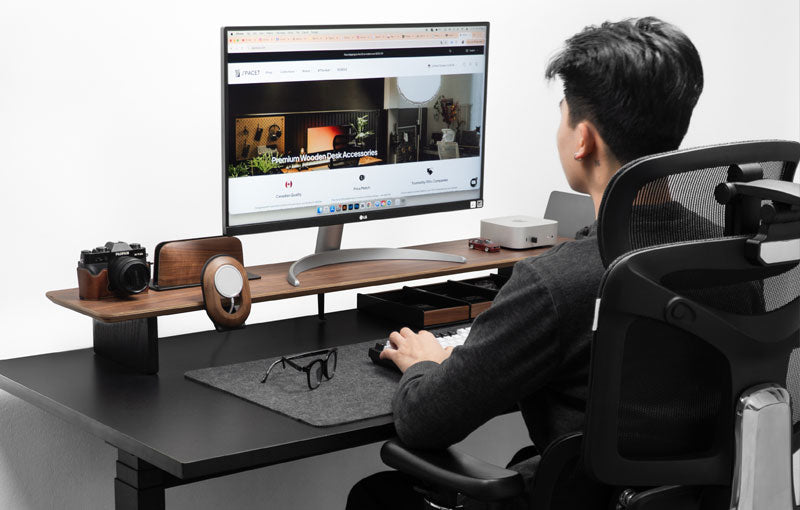
Understanding how long should a desk shelf be starts with the space your equipment actually needs rather than choosing the widest option available. Spacet offers desk shelf solutions for different workstation sizes, from compact setups to wider and modular layouts. By considering desk dimensions, monitor configuration and everyday equipment, you can choose a shelf length that supports organization without taking over useful working space.
How Much of Your Desk Should a Shelf Actually Use?
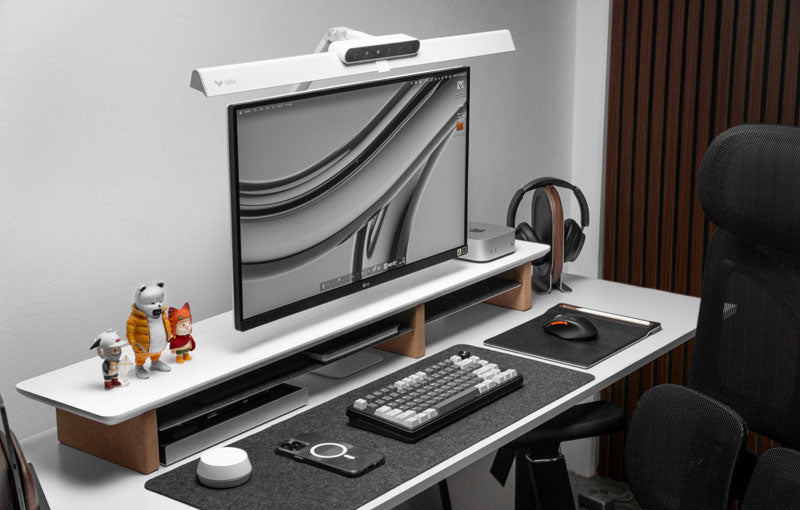
A desk shelf should generally be about 24 to 48 inches (60 to 120 cm) long for most workstations. Compact single-monitor or laptop setups usually fit within 24 to 31 inches (60 to 80 cm), while dual-monitor or ultrawide setups commonly need about 42 to 48 inches (105 to 120 cm). Extra-large desks with multi-monitor layouts or heavier equipment may use shelves around 50 to 58+ inches (125 to 147+ cm).

Treat these ranges as practical starting points, then confirm the final size against the monitor base, other equipment and usable desk width. A longer shelf is useful only when the additional elevated surface has a defined purpose.
Should a desk shelf be shorter than the desk?
Yes. In most conventional setups, a desk shelf should be shorter than the desk. A useful starting point is to leave about 4 to 8 inches (10 to 20 cm) of uncovered desktop on each side when the desk size allows, rather than running the shelf from edge to edge.
Those side areas can remain available for a lamp, speakers, laptop, PC equipment or writing space. If the desk is compact, confirm the remaining working area before choosing a longer shelf.
Instead of asking how much empty space should remain, identify what the uncovered areas of the desk need to accommodate.
How should you divide the available desk width?
Think of the desktop as several functional zones:
- Elevated zone: monitor and equipment intended for the shelf
- Active zone: keyboard, mouse and immediate working area
- Side zones: laptop, speakers, lamp or other accessories
- Temporary zone: notebook, documents or objects used only during certain tasks
This method makes shelf length a space-planning decision rather than a purely aesthetic one.
What Equipment Determines the Minimum Shelf Length?
The monitor base is usually the first measurement that establishes minimum usable shelf width. Additional equipment only needs to influence shelf length when those devices will actually sit on the elevated surface. Equipment stored below or beside the shelf should be evaluated separately.
Why should you measure the monitor base?
Screen width and base width describe different parts of the display. A large panel can extend beyond the shelf while the original base occupies a much smaller footprint.
Measure the widest part of the base and compare that figure with the usable shelf surface. This is more reliable than choosing a shelf according to screen diagonal.
The same principle helps when deciding what monitor stand to buy: the supporting surface needs to match the physical base rather than a generic monitor-size category.
Do speakers and laptops need to fit on the shelf?
Not necessarily. Placing every device on one elevated surface can lead to an unnecessarily long shelf.
A laptop might work better beside the shelf or in a compatible vertical dock, while speakers may remain on the desktop depending on the layout. Start with the equipment that genuinely needs elevation, then decide whether additional shelf width serves a practical purpose.
How Does Monitor Configuration Change Desk Shelf Length?
One screen, two displays and an ultrawide monitor create different horizontal footprints. Instead of assigning a universal shelf length to each configuration, calculate how much supporting surface the actual monitor bases require and then consider spacing, equipment weight and the remaining desktop area.

How much shelf space does one monitor need?
For a single monitor or laptop setup, a desk shelf around 24 to 31 inches (60 to 80 cm) long is a practical starting range. This size is particularly suitable for compact desks around 47 inches (120 cm) wide or smaller and a single 24-inch to 27-inch display, provided the monitor base fits safely on the usable shelf surface.
If the desk is already organized and additional storage is unnecessary, a full-width desk shelf may not be required at all.
Spacet's Monitor Stand v2.0 provides a compact alternative for users whose primary requirement is screen elevation rather than broad workstation organization.
For readers still establishing what is a monitor stand, the important distinction is that a compact riser concentrates on the display, whereas a desk shelf extends the elevated organization zone across more of the workstation.
How should you calculate shelf space for two monitors?
For two monitors, a shelf around 42 to 48 inches (105 to 120 cm) is a useful starting range for many side-by-side setups, including two 27-inch displays when the actual bases and spacing fit. Always verify the specific monitor bases rather than relying on screen diagonal alone.
Start with the width of both monitor bases and the intended spacing between them:
Base A + spacing + Base B ≤ usable shelf width
Width is only one compatibility factor. The shelf must also accommodate the combined equipment weight and provide enough depth for both bases. A desk shelf around 7 to 9 inches (18 to 23 cm) deep is a useful general reference for many monitor-base layouts, but the actual base depth should always be checked before purchase.
A longer shelf therefore does not automatically become the best monitor stand solution for two displays. Compatibility still depends on the actual equipment and product specifications.
Does an ultrawide screen always require a longer shelf?
No. A 34-inch or larger ultrawide often leads shoppers toward a shelf in the 42 to 48-inch (105 to 120 cm) range when additional space is also needed for speakers or accessories, but the screen width alone does not determine the required shelf length. The original monitor base determines the supporting footprint.
Check base width, base depth and complete monitor weight. A long screen with a relatively compact central base can have different shelf requirements from another ultrawide display with broad V-shaped feet.
How Should Shelf Length Change With the Size of Your Desk?
Desk width establishes the maximum physical area available, while equipment determines how much of that width the shelf should use. As a practical reference, 24 to 31 inches (60 to 80 cm) suits many compact single-screen setups, 42 to 48 inches (105 to 120 cm) suits many dual-screen or ultrawide setups, and 50 to 58+ inches (125 to 147+ cm) is better reserved for large 60-inch+ desks with expansive equipment layouts.
Where the desk size allows, leaving roughly 4 to 8 inches (10 to 20 cm) of open space on each side helps preserve room for accessories and active tasks.
What works on a compact desk?
For a compact desk around 47 inches (120 cm) wide or smaller, start with a shelf around 24 to 31 inches (60 to 80 cm) long for a single-monitor or laptop setup. This leaves more of the desktop available for active work than a full-width shelf.
Before fitting the largest shelf possible onto a small desk, consider whether the workstation needs a shelf at all.
A compact Spacet monitor riser may provide the required elevation while leaving more desktop available for the keyboard, mouse and other activities.
Users comparing a monitor stand with broader desk systems can also explore the Spacet collection according to the amount of organization their setup requires.
What works for an everyday home-office desk?
A broader shelf makes sense when the monitor is only one part of the workstation. The Desk Shelf - Workspace is designed around this type of use, combining an elevated surface with additional organization below.
This format is relevant when the objective is to establish a defined equipment zone rather than simply raise one screen.
When does a wider shelf make sense?
Wider workstations can benefit from a longer shelf when multiple pieces of equipment genuinely need the additional surface.
The AIRY Modular Desk Shelf is particularly relevant when shelf size needs to work alongside an organization system that can evolve. A larger format should still be chosen because the equipment needs the space, not simply because the desk can accommodate it.
Should a Desk Shelf Hold Everything on Your Workstation?
No. Effective desk organization uses different levels and zones instead of moving every object onto one shelf. The elevated surface should primarily support equipment that benefits from a stable raised position, while frequently handled objects can remain within easier reach on the main desktop.
What belongs on top of the shelf?
The monitor is the most obvious candidate. Other relatively stationary equipment may also work on the elevated surface when dimensions and load capacity permit.
Avoid adding objects merely to fill unused shelf space. Visual openness can be as useful as another storage position.
What works better underneath?
The area below a desk shelf can accommodate compatible items that need to remain nearby but do not need permanent access. A shelf clearance around 3.5 to 5 inches (9 to 13 cm) is a useful general reference when you want space to slide a keyboard, mouse, notebook or compact accessories underneath, although the actual product dimensions and equipment height should be checked before purchase.
This vertical arrangement allows the same horizontal desk area to perform more than one function.
How Can You Test Desk Shelf Length Before Buying?
You can test a proposed shelf size by marking its footprint on the desk before purchasing. This simple exercise shows how much working surface will remain and whether the planned layout interferes with the keyboard, mouse, laptop or other equipment.
What measurements should you record first?
Measure:
- Total and usable desk width
- Desk depth
- Monitor base width and depth
- Other equipment intended for the shelf
- Proposed shelf width
- Space required for keyboard and mouse use
Use actual equipment measurements whenever possible rather than estimating from product photographs.
How can you visualize the shelf footprint?
Mark the proposed width and depth with removable masking tape or place objects along the intended boundaries. Then use the desk normally.
Try moving the mouse, opening a notebook and positioning the laptop. A shelf size that appears balanced on paper may feel very different once everyday tasks are considered.
Which Spacet Desk Shelf Format Matches Your Available Space?
Spacet provides several approaches because horizontal desk space can serve different purposes. Workspace focuses on straightforward organization, AIRY emphasizes modularity, while the Pro range provides a more integrated organization structure.

When should you consider Workspace?
Choose Workspace when you want one broad elevated zone with straightforward organization below. The design is particularly relevant when a monitor, keyboard and everyday equipment need clearer positions within the same workstation.
When does AIRY make more sense?
AIRY is better aligned with a setup expected to change. The modular approach allows organization to develop around the equipment rather than requiring the complete layout to be fixed from the beginning.
This can be useful when future devices are likely but their exact placement is not yet known.
When should you consider a Pro desk shelf?
The Premium Collection 2.0 is relevant when integrated organization is preferred over building a modular system piece by piece.
The deciding factor should remain usable space: choose an integrated shelf when its dimensions and organization structure correspond to equipment you actually intend to keep on the desk.
What Desk Shelf Sizing Mistakes Should You Avoid?
The most common mistake is treating maximum possible shelf width as ideal shelf width. Another is choosing according to monitor panel size instead of the monitor base. Both approaches can produce a workstation that technically fits but uses available desk space inefficiently.
Is the longest desk shelf always better?
No. An oversized shelf can occupy side areas that would be more useful for other tasks or equipment.
Additional length is worthwhile only when the extra elevated surface has a defined purpose.
Should you buy extra length for future upgrades?
Allowing some flexibility can be sensible, but avoid designing the entire workstation around hypothetical equipment. When future requirements are genuinely uncertain, a modular organization approach may provide more flexibility than simply buying the longest shelf available.
Plan Your Desk Around Usable Space With Spacet
Desk shelf length is ultimately about allocating horizontal space with purpose. A shelf should support the equipment that benefits from elevation while preserving enough open desktop for the tasks that still happen below and beside the screen.
Spacet offers compact monitor elevation, everyday Workspace shelves and expandable desk systems for different workstation footprints. Instead of filling every available centimetre, choose the format that turns the space you already have into a more deliberate working layout.
Contact Spacet
- Website: spacetup.com
- Email: support-en@spacetup.com
- Location: Toronto, Canada

Share: