


You know that feeling when you've been busy all day but can't point to anything truly important that got done? That's the gap between being busy and being productive, and most of us live in it more than we'd like to admit. At Spacet, we've seen firsthand how the right habits combined with a well-organized workspace can completely change the way you work. Here are 15+ strategies to help you boost productivity, whether you're at the office or working from home.
What does productivity actually mean?
Productivity isn't about doing more things. It's about consistently doing the things that matter most. As James Clear, author of Atomic Habits, puts it: productivity is about maintaining a steady, average speed on a few important things, not maximum speed on everything at once. Once that clicks, the way you plan your day starts to change completely.
This matters even more now that hybrid and remote work have become the norm. Knowing how to improve productivity on your own, without the structure of a traditional office, is no longer just a nice-to-have skill. It's how you protect both your output and your wellbeing over the long run.
15 ways to increase productivity at work and at home
1. Manage your energy, not just your time
Most people plan their day around the clock instead of using their energy. Rather than forcing demanding work into low-energy hours, save your most important tasks for when you're naturally at your sharpest.

Practical tip: Track your energy levels for a week to spot patterns. For most people, mornings offer the sharpest focus, making that window ideal for writing, analysis, or creative problem-solving.
2. Set goals using the SMART framework
A vague to-do list is easy to ignore. SMART goals (Specific, Measurable, Achievable, Relevant, Time-bound) give you a clear target so you always know what you're working toward and when it needs to be done.

Instead of writing "finish the monthly report," try "complete the data analysis section of the June report by Wednesday at 5pm." That kind of clarity removes the mental friction that leads to procrastination before you even start.
3. Prioritize the right tasks with the Eisenhower Matrix
Not everything on your to-do list deserves equal attention. The Eisenhower Matrix sorts your tasks into four groups based on urgency and importance, so you can decide quickly what to do now, what to schedule, what to delegate, and what to drop entirely.
| Important | Not important | |
| Urgent | Do it now | Delegate it |
| Not urgent | Schedule it | Let it go |
The highest-performing people tend to spend most of their time in the "important, not urgent" quadrant, that's where strategic thinking, skill-building, and high-impact projects live. Most of us spend too much time reacting to what's urgent and too little time on what actually moves things forward.
4. Plan your next day the night before
Starting your morning without a clear plan means your first hour gets burned on figuring out what to do instead of actually doing it. Spending 10 minutes each evening to write down your 3 to 5 most important tasks for the next day, in order of priority, means you can sit down and get straight into focused work from the moment you start. It's a small habit that saves a surprisingly large amount of mental energy.
5. Use the Pomodoro Technique to stay focused
The human brain simply isn't built to concentrate for hours on end without a break. The Pomodoro Technique structures your work into 25-minute focused blocks, followed by a 5-minute break, with a longer 15 to 30-minute break after every four rounds.

This approach doesn't just help you stay focused in the moment, it also gives you a clearer sense of how long things actually take, which makes future planning a lot more realistic.
6. Stop multitasking
Multitasking feels productive but it's actually one of the biggest drains on your output. Your brain doesn't truly do two things at once, it switches back and forth between tasks, and every switch costs cognitive effort and lowers the quality of your work. Research suggests multitasking can reduce efficiency by up to 40% compared to working through tasks one at a time. Commit to one thing until it's done, then move on.
7. Batch similar tasks together
Every time you switch between different types of work, your brain needs time to reload and refocus. Checking emails scattered throughout the day, for example, is far less efficient than setting two fixed windows, say 9am and 4pm, for all of your inbox work. The same logic applies to meetings, creative work, and admin. Batching keeps you in the right mental mode for longer and cuts out the wasted time of constantly changing gears.
8. Turn off notifications and protect your focus blocks
Every interruption, even a quick glance at a notification, breaks your concentration. Research from UC Irvine found it takes an average of 23 minutes to return to deep focus after an interruption. Turn off non-essential notifications during your focus blocks, put your phone out of sight, and use "do not disturb" mode.
One specific habit worth building: don't open email first thing in the morning. It immediately puts you in reactive mode instead of letting you start the day on your own terms.
9. Automate repetitive tasks
Repetitive tasks like compiling weekly reports, sending routine follow-ups, or manually updating spreadsheets eat up time without adding proportional value. Tools like Zapier, Make (formerly Integromat), or built-in automation features in Google Sheets can handle these in the background while you focus on work that actually requires human judgment. A few hours of setup today can save dozens of hours every month going forward.
10. Optimize your workspace, starting with your monitor height
This is the one most people overlook, yet it has a direct impact on both physical comfort and mental focus. When your monitor sits too low, you spend hours with your neck bent forward, which leads to tension in your neck and shoulders that quietly drains your concentration. The ergonomic standard is simple: your eyes should naturally land on the top third of your screen when you're sitting with your back straight.
That's exactly what Spacet's desk shelves are designed to do, combining thoughtful ergonomics with premium craftsmanship trusted by over 100 global companies across tech, finance, and media.
The Desk Shelf Pro v2.0 is built from 15-ply walnut hardwood and industrial-grade aluminum, with a 100kg weight capacity. Its integrated lower shelf keeps your keyboard, notebook, or small accessories neatly stored underneath, so your desk surface stays clear and your mind stays focused. It comes in two sizes 80cm and 117cm, fitting both single and dual-monitor setups.

If you prefer something more modular, the AIRY Modular Desk Shelf lets you build your setup around a mounting grid system, adding accessories like a laptop riser, headphone holder, phone holder, or tablet stand exactly where you need them.

Explore Spacet's Desk Shelf System collection to discover both desk shelves and a range of modular add-ons, making it easy to build a workspace that fits your style and workflow.
11. Keep your desk organized
Research from Princeton University found that visual clutter around you actively reduces your brain's ability to process information and increases stress. A clean, organized desk isn't just aesthetically nice, it creates the mental environment where focused work comes more naturally. A simple rule that works: only keep on your desk what you'll actually use today, and put everything else away.
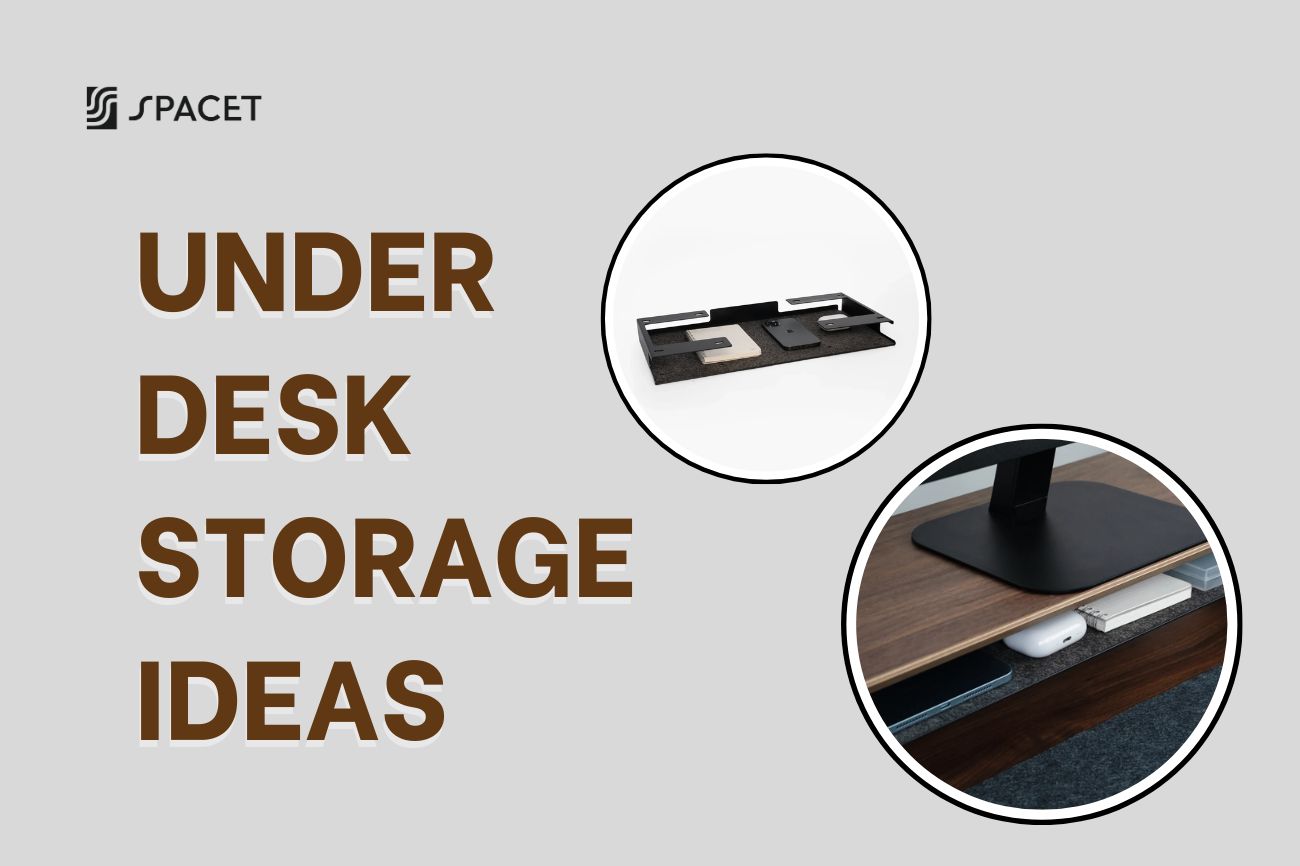
Small accessories like Spacet's Desk Tray Drawer or Headphone Stand are practical solutions that keep everyday items within reach without adding to the visual noise on your desk. When everything has a designated spot, you stop losing time searching for things and stop losing focus to the clutter around you.

12. Build a consistent morning startup routine
Your brain responds well to familiar cues. A simple, consistent startup routine, like pouring a glass of water, opening your to-do list, and spending five minutes reviewing your plan for the day, signals to your brain that it's time to shift into work mode. The routine itself doesn't need to be elaborate. What matters is doing it the same way every day, because that repetition is what creates the mental "on switch."
13. Take intentional breaks instead of pushing through
Working for eight hours straight doesn't equal high productivity. Short, intentional breaks help your brain recover, consolidate what you've learned, and maintain creative thinking throughout the day.
Getting up and moving around for a few minutes every 60 to 90 minutes, looking away from your screen, or just drinking a glass of water makes a real difference. Resting properly isn't a waste of time. It's how you stay sharp for the full workday instead of fading out by mid-afternoon.
14. Learn to say no to the things that don't fit
One of the most common reasons people can't finish important work is because their schedule gets filled by other people's priorities. Protecting your time sometimes means declining unnecessary meetings, pushing back on additional tasks when you're already at capacity, or simply not responding immediately to every message. Saying no at the right moment is how you say yes to the work that actually matters.
15. Review and reflect on your productivity each week
Improving without measuring is like trying to get somewhere without a map. Setting aside 15 minutes at the end of each week to look at what got done, what didn't, and why is one of the most underrated productivity habits. You'll often discover that one small recurring habit is quietly costing you an hour every day that you never noticed. A weekly review keeps you from making the same mistakes on repeat and helps you refine your approach over time.
How to increase productivity when working from home
Working from home offers flexibility, but it also comes with distractions that the office naturally handles for you. A few principles that make a real difference for home workers:
- Create a clear physical boundary between your workspace and your rest space, even if you're working in a small apartment.
- Get dressed as if you're going into the office, because the routine itself signals "work mode" to your brain.
- Set fixed working hours and let the people you live with know, so they can respect your focused blocks.
- Invest in a proper desk setup, including a monitor at eye level, good lighting, and an ergonomic chair.
- Use a site-blocking app like Freedom or Cold Turkey during your deep work sessions.
When you work from home, your workspace does two jobs at once: it's both a tool and a psychological signal. A dedicated setup makes it easier for your brain to switch into work mode the moment you sit down, instead of drifting back to the couch or bed.
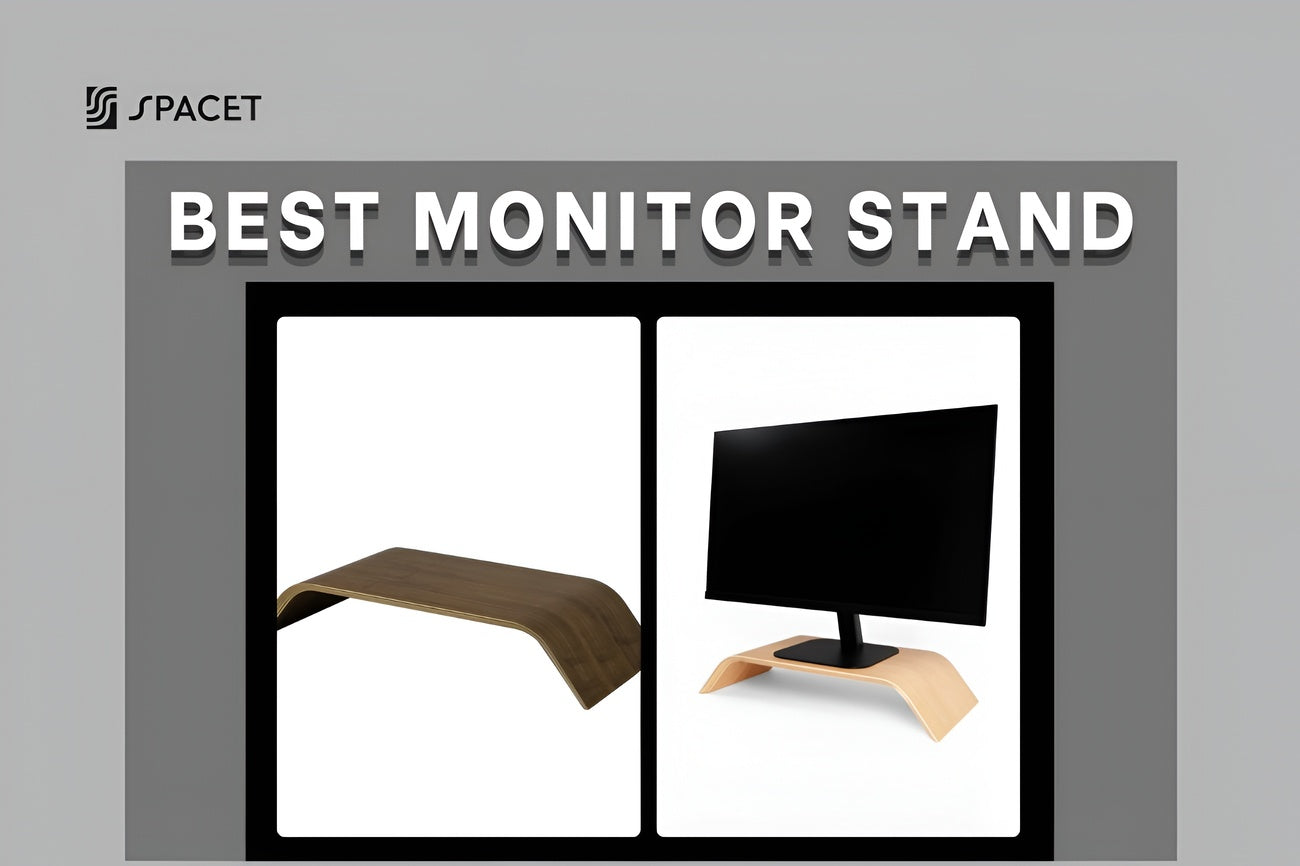
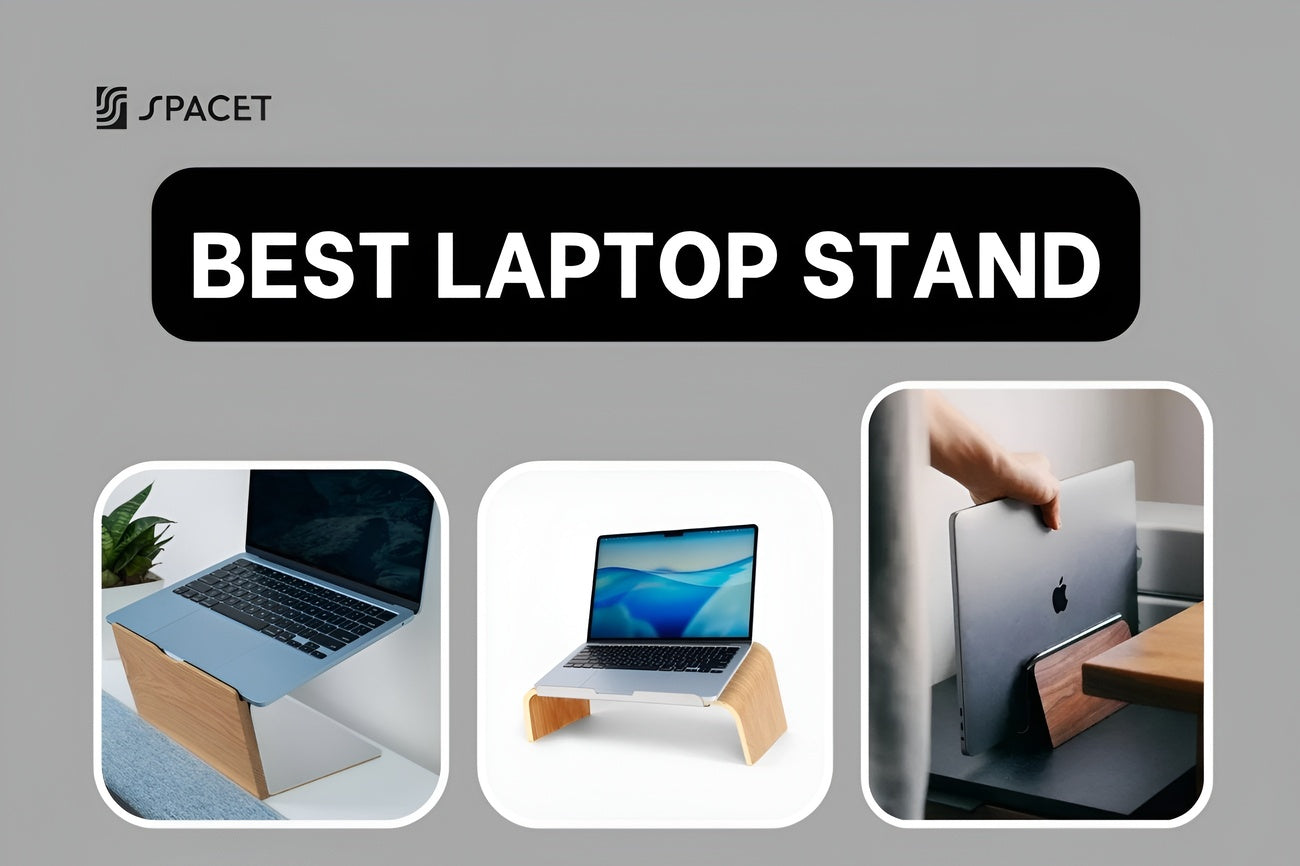
If you're building a home office, a few thoughtful upgrades can make a noticeable difference. The Spacet Desk Shelf, Monitor Stand v2.0, and Laptop Stand v2.0 all help position your screen at eye level for a more ergonomic setup. While the Felt Desk Pad creates a tidy, comfortable workspace that helps you stay focused throughout the day.

How to increase productivity in the workplace
Productivity isn't just a personal challenge, it's a team one too. Some approaches that make a measurable difference at the organizational level:
- Run shorter, outcome-focused meetings and be selective about who actually needs to be in the room.
- Use a centralized project management tool like Notion, Asana, or Linear instead of scattering information across emails and chat channels.
- Build protected "deep work blocks" into the team calendar where no one schedules meetings or expects immediate replies.
- Invest in the physical work environment, from lighting and temperature to the desk setup each person works at every day.
- Recognize effort and progress, not just final outcomes.
Quick reference: match strategies to your specific challenge
| What do you need to improve? | Best strategies to try |
| Hard to focus, easily distracted | Pomodoro, turn off notifications, batch tasks |
| Always busy but important work stays undone | Eisenhower Matrix, SMART goals |
| Running out of energy by mid-afternoon | Energy management, intentional breaks |
| Struggling to stay productive working from home | Separate your space, optimize your desk setup |
| Too much time on repetitive, low-value tasks | Automation with Zapier or Make |
| Neck and shoulder pain after long work sessions | Raise your monitor to eye level with a desk shelf |
FAQs about how to increase productivity
What is the most effective way to improve productivity when working from home?
The biggest impact comes from combining clear time management with a properly set up workspace. Fix your working hours, protect your focus blocks by turning off notifications, and make sure your physical environment supports concentration, monitor at eye level, tidy desk, good lighting.
How can I stop procrastinating and actually get started?
Try David Allen's two-minute rule: if something takes less than two minutes, do it immediately. For bigger tasks, identify the single most concrete next action you can take right now and start there, rather than thinking about the whole project at once. Getting started is almost always the hardest part. Once you're moving, momentum tends to take care of the rest.
Do I need a standing desk to boost productivity?
Not necessarily. Proper posture and monitor height have a bigger impact on productivity than a standing desk. If you're sitting with your back straight and your screen at eye level, you can work comfortably and effectively for long stretches. A desk shelf is a simpler, more affordable way to get there without replacing your desk.
What time of day is best for peak productivity?
For most people, 9am to noon is the best time for deep work like writing, planning, or problem-solving. After 3pm, switch to lighter tasks such as meetings, email, or admin work. Since everyone's energy peaks at different times, track your focus for a week or two to find the schedule that works best for you.
How can I maintain high productivity over the long term?
Build small, repeatable routines you can actually stick to, like planning your next day the night before, checking email at set times, or doing a brief weekly review every afternoon. Pair those habits with an optimized workspace and proper rest.
Conclusion
Improving productivity is a process, not a one-time fix. Start with one or two changes from this list, give them enough time to become habits, and build from there. And don't underestimate how much your physical environment affects the way you work.
If you're ready to upgrade your workspace, explore Spacet's Desk Shelf System collection to find the right fit for your setup and your workflow. For more workspace and productivity guides, visit the Spacet Blog.

Share: