


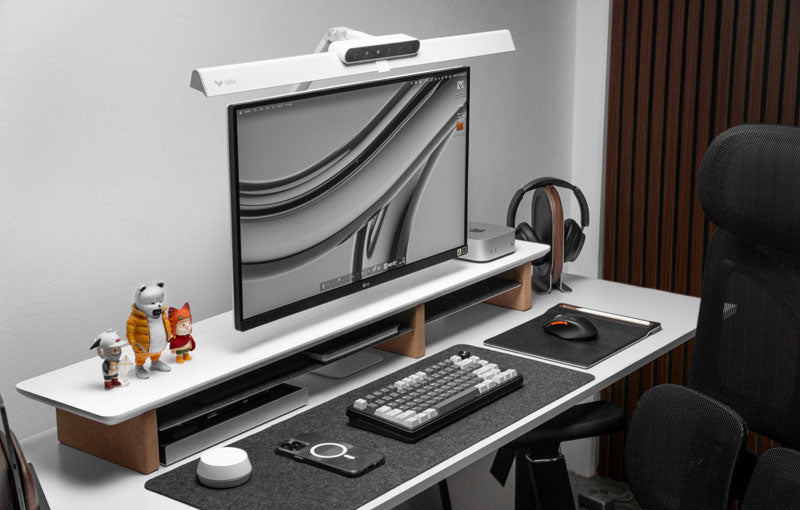
If you are wondering what do you call the shelves above a desk, the answer depends on where the shelf sits and what purpose it serves. Spacet helps distinguish floating shelves, desk shelves, and monitor stands so you can identify the right type and create a more organized, functional workspace.
What Are Shelves Above a Desk Usually Called?
There is no single name for every shelf positioned around a desk. The correct term depends on whether the shelf is attached to the wall, supported by the desktop, or designed specifically to hold a monitor.
What is a floating shelf above a desk?
A floating shelf is mounted directly to the wall, usually with concealed or low-visibility hardware. The shelf does not rely on the desk for structural support.

Floating shelves are useful for books, décor, storage containers, and supplies that do not need to remain on the main working surface. Because the shelf uses wall space, the desktop remains available for a monitor, keyboard, laptop, and active tasks.
What is a desk shelf?
A desk shelf sits directly on the desktop and becomes part of the workstation. Rather than providing remote wall storage, the shelf creates another horizontal level for organizing equipment.
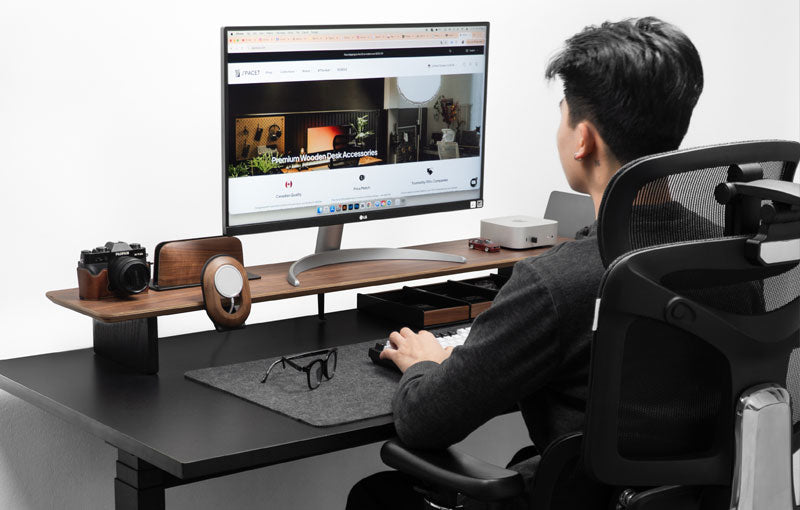
A desk shelf can hold a monitor or other suitable equipment while leaving accessible space underneath. If you are considering where to buy a desk shelf, Spacet's complete workspace collection provides a useful starting point for comparing shelves, storage components, stands, and other desk accessories.
What is a monitor riser?
A monitor riser, sometimes called a monitor stand, is more specialized. Its primary purpose is to raise a display from the desktop rather than create a broad storage system.
This distinction matters because a wide desk shelf and a compact riser can both support an elevated screen zone, but they solve different workspace problems.
How Can You Tell Which Type of Desk Shelf You Have?
Start with the shelf's physical connection to the workspace. Where the shelf receives support usually provides the clearest clue to its correct name.
Is the shelf attached to the wall?
A shelf mounted above the desktop is generally called a wall shelf or floating shelf. A floating design usually conceals much of its mounting hardware, creating the appearance of a shelf extending directly from the wall.
This type works well when vertical wall space is available but the desktop needs to remain open.
Does the shelf sit directly on the desktop?
A raised platform supported by the desk itself is generally described as a desk shelf or desktop shelf. These structures are closely integrated with the working area and keep equipment within easy reach.
Before selecting one, consider how long a desk shelf is in relation to the monitor base, other equipment, and usable desk width. The goal is not simply to fit the longest possible shelf but to preserve enough open surface for everyday work.
Is the shelf primarily supporting a monitor?
If display elevation is the main purpose, monitor riser or monitor stand is usually more precise. Spacet's Monitor Stand v2.0 represents this more focused approach, providing a compact elevated surface rather than turning the entire back of the desk into a shelf system.
What Is the Difference Between a Desk Shelf, Monitor Riser and Floating Shelf?
The three structures can look similar in desk-setup photos, but their placement and functions are different.
|
Term |
Position |
Primary purpose |
Typical use |
|
Floating shelf |
Mounted on wall |
Storage or display |
Books, décor, supplies |
|
Wall shelf |
Mounted on wall |
General storage |
Office items and equipment |
|
Desk shelf |
Supported by desktop |
Organization and elevation |
Monitor and accessories |
|
Monitor riser |
Supported by desktop |
Display elevation |
Computer monitor |
|
Desktop organizer |
Supported by desktop |
Small-item organization |
Notes, cables, stationery |
A desk shelf and floating shelf are therefore not interchangeable terms. One becomes part of the desktop setup, while the other uses the wall as its supporting structure.
Which Shelf Type Works Best for Different Desk Setups?
The best shelf type depends on the problem the workspace needs to solve. Start with available space and equipment rather than choosing based only on appearance.
What works when desktop space is limited?
For a small desk, prioritize a compact footprint and avoid adding an oversized structure simply to create more levels.

Small devices can also be organized independently instead of requiring a full-width shelf. For example, Spacet's Desk Stand Slim v2.0 provides a dedicated position for a phone or tablet within a relatively small footprint.
What works when monitor elevation is the priority?
A dedicated riser is often the more direct solution when the display is the only equipment that needs elevation. Before deciding what monitor stand to buy, check the monitor base dimensions, equipment weight, available desktop area, and desired screen position.
Spacet's Monitor Stands collection provides a more focused route for this use case rather than requiring a complete desk shelf system.
What works when storage is the priority?
Storage does not always require another large shelf. A drawer can use the area below an elevated surface while keeping small items out of the active working zone.
The Desk Tray Drawer v2.0 is designed to integrate with Spacet desk shelves and provides storage for smaller desk essentials. Spacet This creates a layered workstation without placing every accessory on the visible shelf surface.
What Should You Put on or Around a Desk Shelf?
A desk shelf works best when each level has a defined role. Avoid treating the elevated surface as extra space that needs to be filled.
Which items belong on the elevated surface?
A monitor is a natural candidate when the shelf is designed and rated for the display. Small speakers or other frequently used equipment may also occupy the elevated zone when dimensions and load requirements allow.
The active desktop can then remain available for the keyboard, mouse, notebook, or other equipment used continuously.
Where should laptops and portable devices go?
A laptop that primarily connects to an external display does not necessarily need to stay open on the main work surface.
The Laptop Dock v2.0 holds compatible laptops vertically to reduce the amount of desktop space they occupy. Spacet also offers a Dual Laptop Dock v2.0 for organizing two compatible devices in one stand.
Should You Use a Wall Shelf or a Desk Shelf Above Your Workspace?
Choose a wall shelf when the main goal is storage without occupying the desktop. Choose a desk shelf when the elevated surface needs to become an active part of the workstation, particularly for monitor placement, accessible equipment, or under-shelf organization.
When is a wall-mounted shelf more practical?
Wall-mounted shelving can work well when the desk is narrow or when stored objects are not needed constantly. Books, decorative objects, and occasional office supplies can move away from the working surface.
Installation, wall construction, shelf load limits, and clearance above the monitor should all be considered before mounting a shelf.
When is a desktop shelf more practical?
A desktop shelf keeps equipment closer to the user's working area and does not depend on wall mounting. The structure can create separate vertical zones for a display, accessories, and items stored underneath.
This approach is especially useful when the desk itself needs better organization rather than additional general room storage.
How Can Spacet Help You Organize the Space Around a Desk Shelf?
A useful workstation does not have to depend on one large product performing every function. Spacet offers shelves, stands, docks, drawers, and other organization components that can be selected according to the equipment actually used on the desk.

Start with the main workspace structure
First determine whether the desk needs a wall shelf, desktop shelf, or compact monitor riser. If the solution needs to sit on the desktop, compare the available surface with the monitor and other equipment before choosing its footprint.
This function-first approach prevents a simple organization problem from becoming an unnecessarily complicated setup.
Add storage and device holders where needed
Small accessories can be assigned dedicated locations instead of spreading across the desk. Spacet's desk organizers and storage collection includes drawers, trays, and related organization products that can complement a broader workspace.
Laptop docks and device stands can then address specific equipment without forcing those functions into the shelf itself.
Contact Spacet
- Website: spacetup.com
- Email: support-en@spacetup.com
- Location: Toronto, Canada


Compartir:
Where Can I Buy a Desk Shelf? A Guide to Choosing the Right Setup