


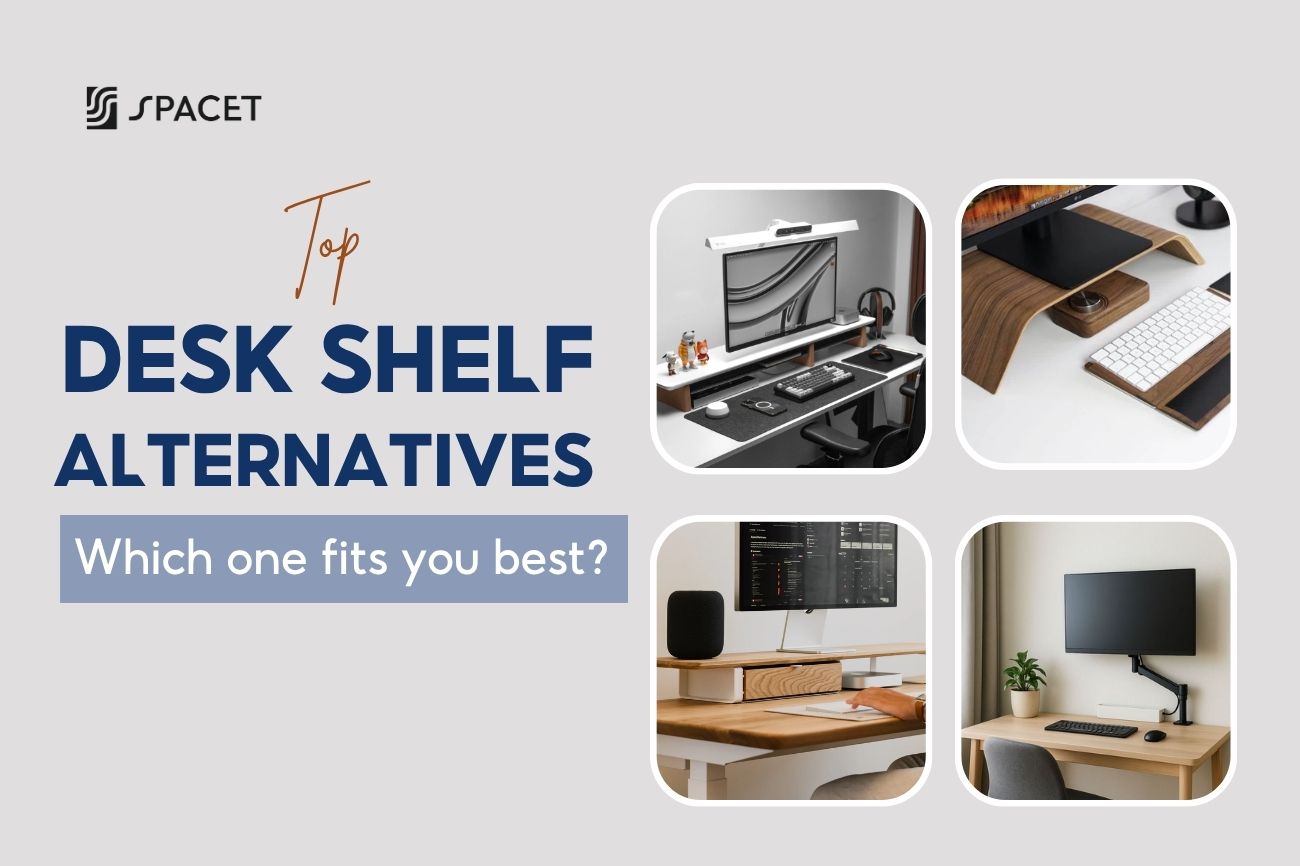
If you’re upgrading your workspace and feeling stuck between multiple options, understanding desk shelf and desk shelf alternatives is the first step. At Spacet, we’ve seen that most people don’t lack options, they just need a clearer perspective to choose the right one from the start.
What are desk shelf and desk shelf alternatives?
A desk shelf is a raised platform placed on your desk to elevate your monitor to eye level while creating extra space underneath for storage and organization. It’s one of the simplest upgrades that can significantly improve both your workflow and overall desk aesthetics.
If you want a deeper breakdown of how it works and how to choose one, you can read more here: What is a desk shelf? Who actually needs one & Which type to choose
Desk shelf alternatives are products that can replace part or all of the desk shelf’s function, whether it’s raising your monitor, saving desk space, or organizing your setup. However, each option is designed with a different goal in mind, so the real-life experience can vary quite a bit.

Understanding these differences helps you avoid choosing the wrong setup, especially if you’re aiming for a workspace that’s both functional and visually clean in the long run.
Compare desk shelf with each alternative
When choosing the right setup, it’s not just about picking one product, but understanding how each option compares based on your actual needs. In this section, we’ll break down how a desk shelf stacks up against the most common alternatives, so you can see the differences clearly.
Here are the main desk shelf alternatives we’ll compare in this guide:
- Desk riser
- Monitor arm
- Monitor stand
- Shelf organizer
Desk shelf vs Desk riser
A desk riser (or standing desk converter) is a platform that sits on top of your desk and allows you to raise your entire workspace so you can switch between sitting and standing.
In terms of design, it typically includes:
- A large top surface to hold monitors or a laptop with solid weight capacity
- A lower tier for keyboard and mouse to maintain proper working distance
- A lift mechanism using springs or gas pistons for height adjustment
- A sturdy metal frame to keep everything stable while moving

Desk risers are ideal for people who work long hours and actively switch between sitting and standing. That said, because they lift your entire setup, they tend to be bulky and take up a lot of desk space.
| Criteria | Desk riser | Desk shelf |
| Main purpose | Sit/stand ergonomics | Space optimization |
| Footprint | Large, multi-layered | Compact, minimal |
| Structure | Complex lifting system | Fixed, simple |
| Experience | Flexible but requires adjustment | Plug-and-play |
| Aesthetics | Function-focused | Balanced design |
A desk riser makes sense if standing is a core part of your workflow. If not, it can feel like more than you actually need.
Desk shelf vs Monitor arm
A monitor arm is a mechanical arm mounted to your desk or wall that holds your monitor instead of placing it directly on the desk.
Its design focuses on adjustability:
- Multiple joints for height, tilt, and rotation adjustments
- VESA mount compatibility for most monitors
- Gas spring or tension system for smooth movement
- Optional built-in cable management for cleaner routing

Monitor arms are great for multi-monitor setups or workflows that require frequent screen adjustments. However, they do require proper installation, and if not managed well, the setup can feel a bit technical or cluttered.
| Criteria | Monitor arm | Desk shelf |
| Flexibility | Very high | Fixed |
| Installation | Requires setup | Ready to use |
| Desk space | Fully cleared underneath | Adds usable layer |
| Cable management | Depends on setup | Easier to control |
| Overall look | Technical | Clean, minimal |
Monitor arms are powerful for flexibility, but not everyone actually needs to adjust their screen that often.
Desk shelf vs Monitor stand
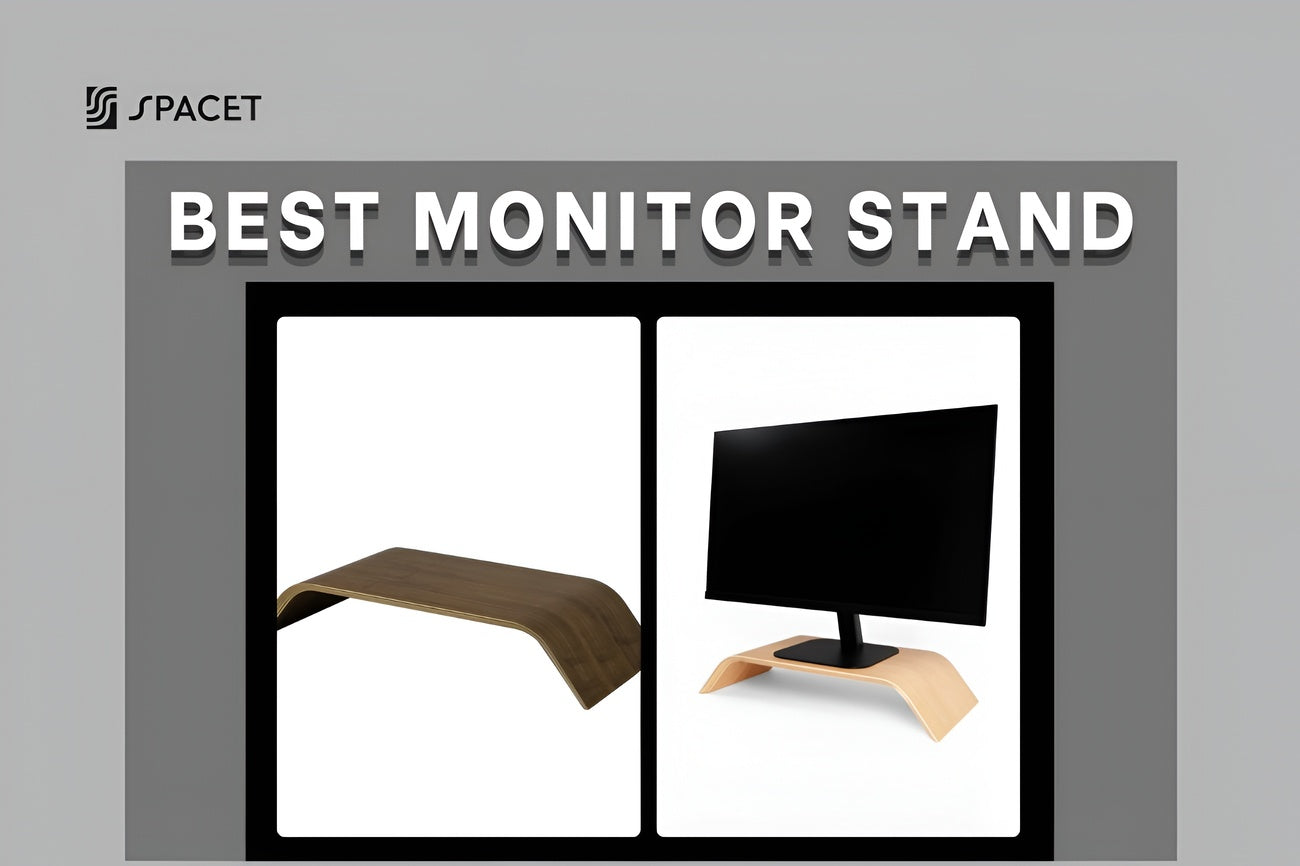
A monitor stand is a simple platform placed under your monitor to raise it slightly. It’s one of the most common entry-level solutions.
Typical design features include:
- A fixed-height platform for screen elevation
- Compact size, usually for a single monitor
- Optional small compartments or drawers
- Materials like wood, metal, or plastic

Monitor stands are great for beginners or minimal needs when you just want your screen at a better height without worrying about full desk organization.
| Criteria | Monitor stand | Desk shelf |
| Function | Basic elevation | Elevation & organization |
| Size | Compact | Wider |
| Expandability | Limited | More flexible |
| Experience | Basic | More refined |
| Setup depth | Simple | More structured |
A monitor stand does the job, but it can feel limiting once your setup grows.
Desk shelf vs Shelf organizer
A shelf organizer is designed to store and arrange items on your desk, focusing more on organization than ergonomics.
It usually includes:
- Multiple tiers or compartments for sorting items
- Flexible sizing and easy repositioning
- Designs that sometimes lean toward decor
- No support for monitor elevation

Shelf organizers are useful if you have lots of small items and want a tidier desk surface.
| Criteria | Shelf organizer | Desk shelf |
| Main function | Storage | Storage + elevation |
| Ergonomics | None | Included |
| System feel | Fragmented | More unified |
| Aesthetics | Depends on setup | Easier to keep consistent |
| Use case | Decor & organization | Full desk setup |
Shelf organizers work well for storage, but often need to be paired with something else to improve your working posture.
Quick comparison: Which one fits you best?
| Criteria | Desk riser | Monitor arm | Monitor stand | Shelf organizer | Desk shelf |
| Main purpose | Sit/stand | Screen flexibility | Basic lift | Storage | All-in-one |
| Complexity | High | Medium | Low | Low | Low |
| Setup effort | Bulky | Requires install | Easy | Easy | Very easy |
| Expandability | Low | High | Low | Medium | Medium–high |
| Aesthetics | Medium | Technical | Basic | Varies | Clean |
| Best for | Ergonomics | Multi-screen users | Beginners | Organizers | Balanced setups |
| Overall score | 7/10 | 8/10 | 6/10 | 6.5/10 | 9/10 |
Looking at the big picture, desk shelf tend to offer the most balanced experience if you care about both functionality and a clean-looking setup.
When should you choose a desk shelf?
A desk shelf usually makes the most sense in setups where you want something clean, stable, and easy to maintain over time. It’s especially helpful when you don’t want to constantly adjust or reconfigure your workspace.
You’ll likely benefit from a desk shelf if:
- You want a cleaner, more organized desk without adding complexity
- You prefer a setup that’s ready to use without installation
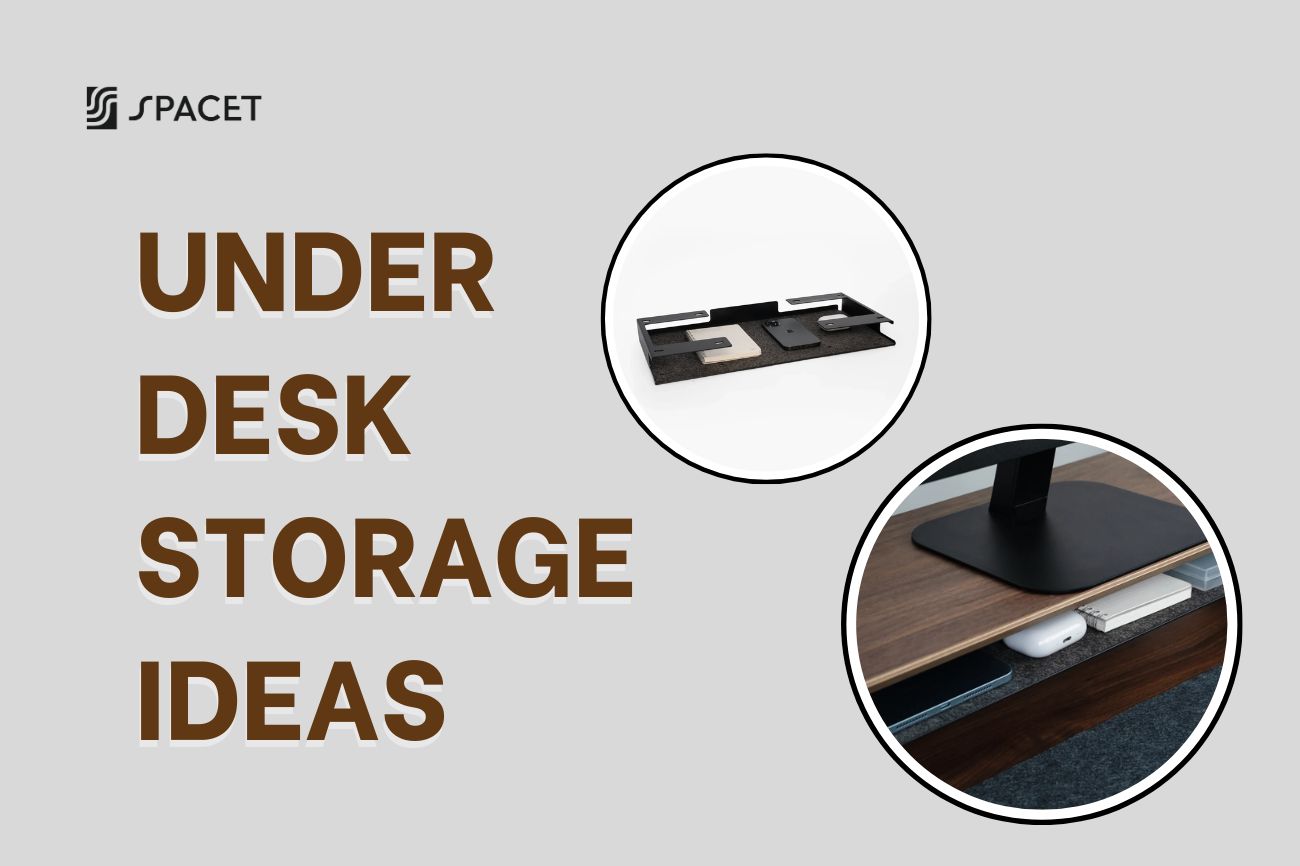
- You need extra space underneath for accessories or daily items
- You care about both functionality and overall desk aesthetics
- You’re building a long-term setup and don’t want to keep upgrading
Spacet desk shelf recommendations
At Spacet, the desk shelf is designed not just as accessories, but as part of a complete desk setup system. Depending on your needs and style, there are a few standout options worth considering.
Desk Shelf Pro v2.0
This is a premium desk shelf designed for stability, durability, and a refined look. It’s built for users who want a clean, finished setup right from the start.
- Made from high-quality natural walnut wood with a smooth finish
- Strong structure with excellent weight support
- Minimalist design that fits premium workspaces
- Creates a clean, layered layout with strong visual depth

AIRY Modular Desk Shelf
AIRY is designed for flexibility and adaptability. It’s lighter, more open, and ideal if you want to evolve your setup over time.
- Modular design for customizable layouts
- Lightweight and airy structure that fits various desk sizes
- Expandable with additional accessories
- Great for setups that change or grow over time
>> Explore the full Desk Shelf System of Spacet

Monitor Stand V2.0
If you prefer starting simple before moving into a full desk shelf system, Monitor Stand V2.0 is a more basic alternative within the Spacet ecosystem.
- Compact design that fits most desks easily
- Solid build quality for stable support
- Provides basic screen elevation
- Ideal for beginners or minimal setups

FAQs about desk shelf alternatives
Is a desk shelf really necessary?
Not required, but it’s one of the easiest ways to improve both comfort and desk organization.
Does a monitor arm make your desk cleaner?
It can, but only if cables and positioning are managed properly.
Is a desk riser worth it?
Yes, if you regularly switch between sitting and standing. Otherwise, it might be more than you need.
Can you combine multiple solutions?
Yes, many setups combine a monitor arm with a desk shelf for maximum flexibility.
Does a desk shelf improve posture?
Yes, by raising your screen to eye level and reducing neck strain.
What should beginners start with?
A monitor stand or desk shelf are both great entry points depending on your needs.
Conclusion
Each desk shelf alternatives solves a specific problem, whether it’s ergonomics, flexibility, or storage. But when you look at your everyday experience, a setup that’s clean, simple, and easy to live with often brings the most long-term value.
If you’re looking for a setup upgrade that feels complete without being complicated, a desk shelf from Spacet is a strong place to start.

Compartir: